
A former poaching camp transformed: Etate evolves into an international research station
Today, Etate is a safe haven for bonobos and elephants threatened by poaching. But it wasn’t always this way.
In 1997, current SCI board member Dr. Bila-Isia Inogwabini, along with researcher Ellen VanKrunkelsven and park authorities, on behalf of the Zoological Society of Milwaukee (ZSM), were among the first researchers to explore the northern region of the Salonga National Park and assess the presence of bonobos and other wildlife. During this expedition, a local community member, Edmond Isomana, showed the group a poaching camp on the banks of the Salonga River. It was called Etate. The group decided that the camp would make a good base for the park ecoguards and a base camp for future research teams. Ever since that day, we have called Etate our base camp and home away from home.
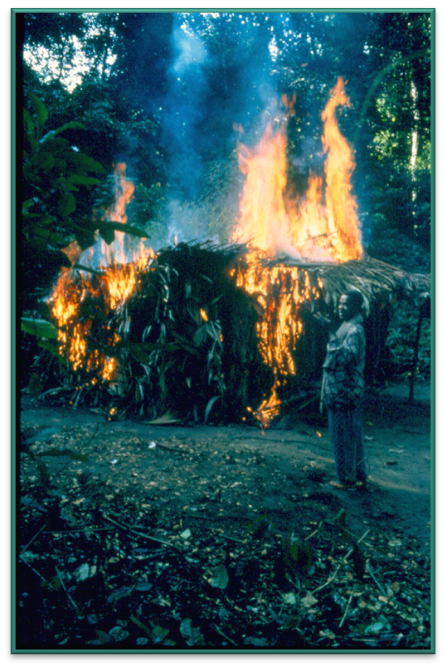
The original poaching camp destroyed in 1997 by ecoguards while Edmond looks on.
Etate's location
SCI’s Etate Research Station is located within Salonga National Park (SNP), a landscape distinguished by its mosaic of swamp, land, and rivers. There’s not a lot of dry land near the rivers, making it hard to find a campsite let alone a research site.
Located along the Salonga River, the Etate Research Station occupies a point of higher ground. Etate’s location is isolated - the closest major town is about 50 kms down river. The boat journey from SCI’s headquarters in Mbandaka to Etate is measured in days making the first sighting of Etate’s port a welcome treat.
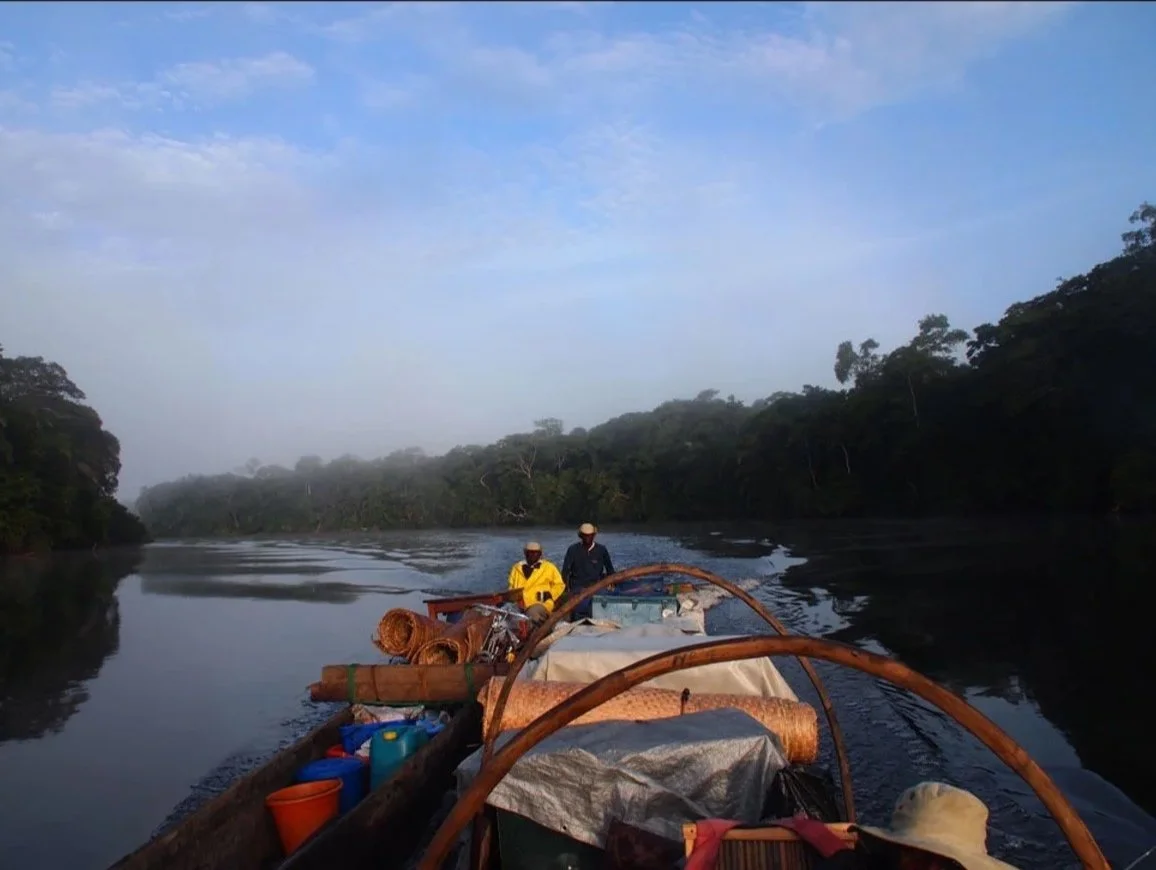
Loaded pirogue with equipment making its way to the Etate river port
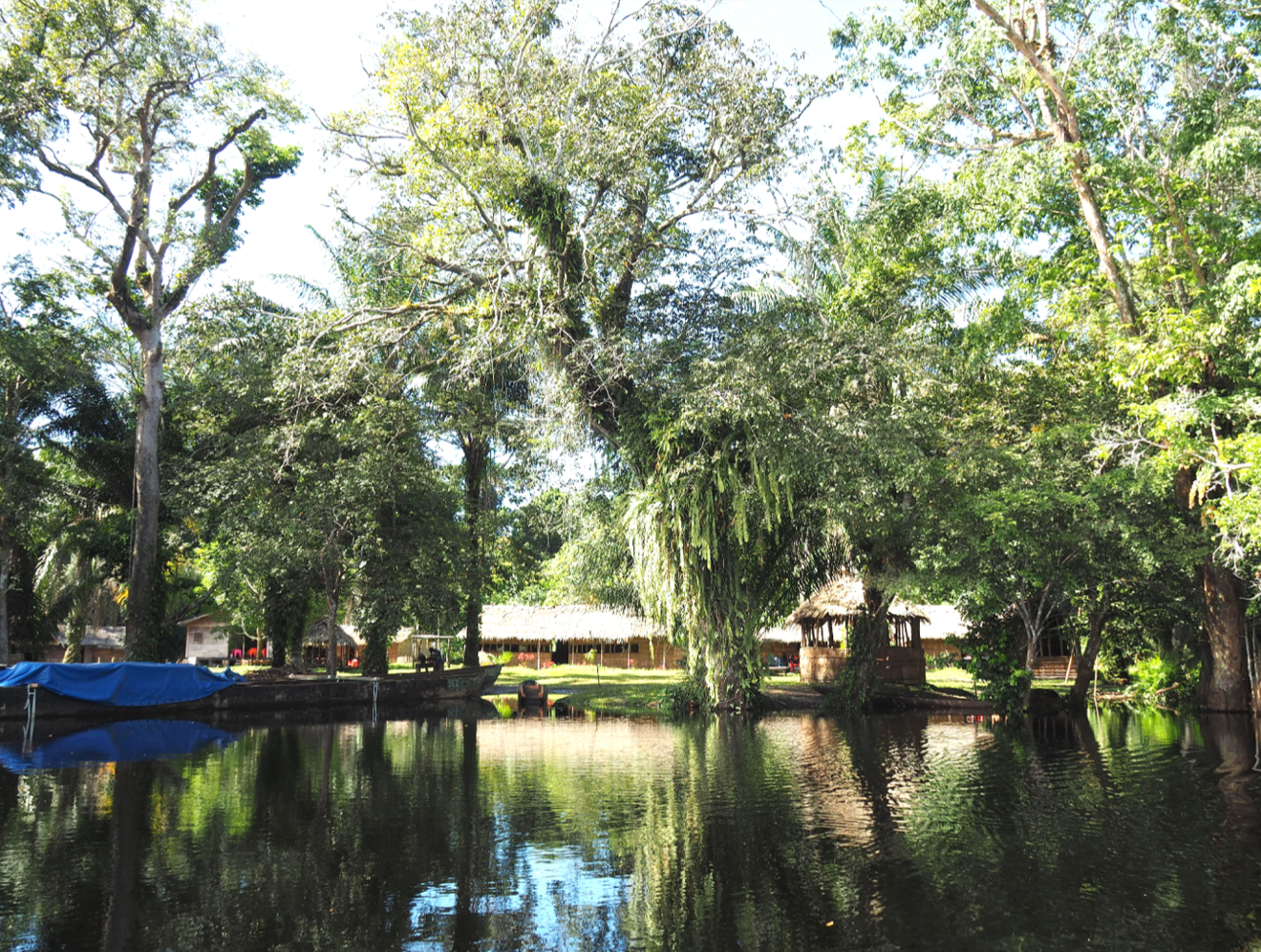
After several days of travel by boat, Etate's port is a welcome sight
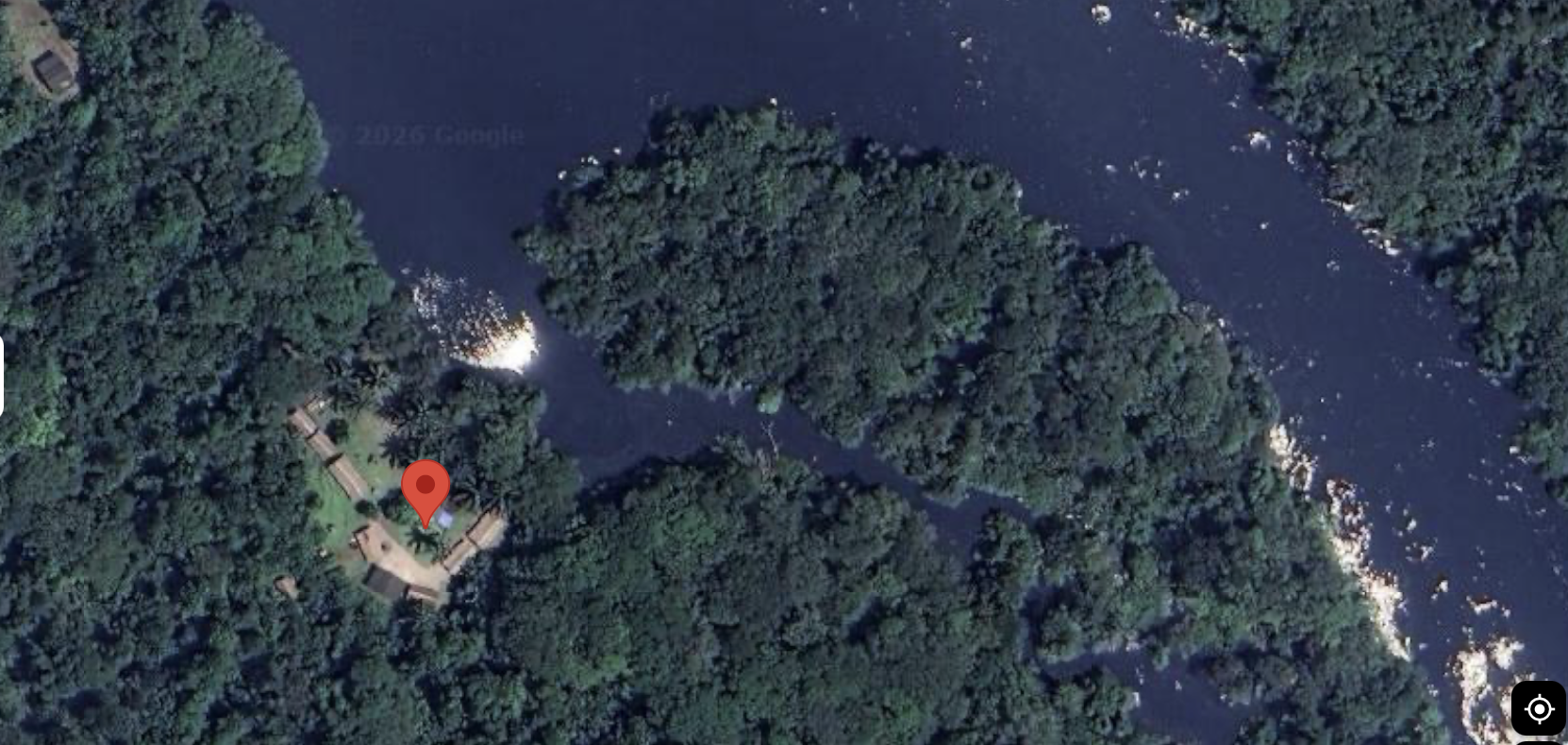
Satellite imagery showing Etate’s location along a hook in the river.
Years later, Edmond would explain that the word Etate refers to a crook in the river that creates a bay (see above). We know from ancient pottery shards found at the site that Etate was once a busy port. The pottery likely held copal. Copal, an ancient trade commodity, is hardened tree resin or early amber, sold for its value as a fire-starter and plastic-like properties. Etate was also Edmond’s ancestral village.
Edmond didn't just suggest Etate as a location for a permanent basecamp. He helped build it. He led construction of the first thatched houses that helped transform the site into a center for research.
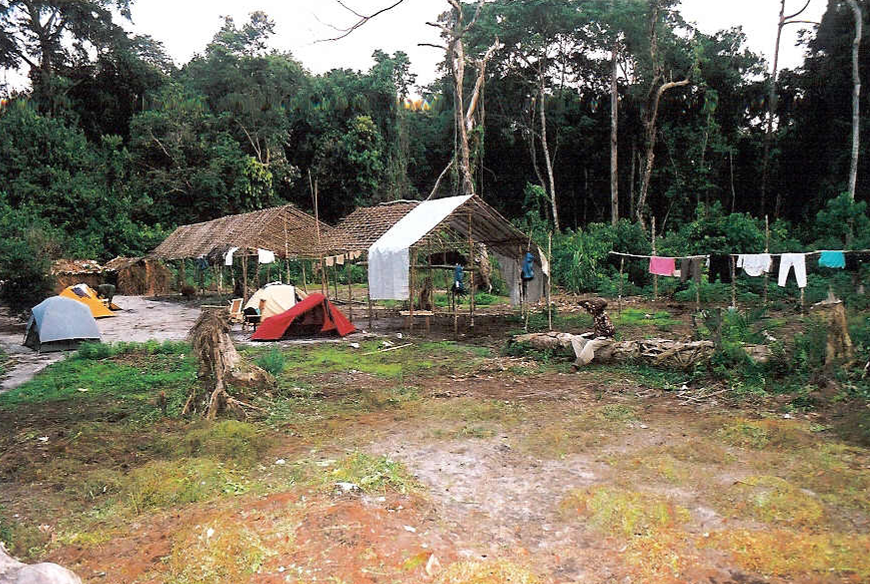
Early days of Etate’s construction, 2004
Later, we added two elevated wooden houses that were partially pre-fabricated in Kinshasa. In 2014, we shipped the walls, roofs and floors piece by piece to Etate on a flotilla of pirogues. Adding two wooden houses to the Etate basecamp, one for researchers and one for ICCN park guards, brought a sense of permanence to our work and the start of a long-term investment in our conservation efforts in Salonga.
In the wet, marshy terrain of Salonga, the elevated wooden houses were a gamechanger.
We could now use and store equipment like computers and batteries, office supplies, and research equipment and support an internet connection.
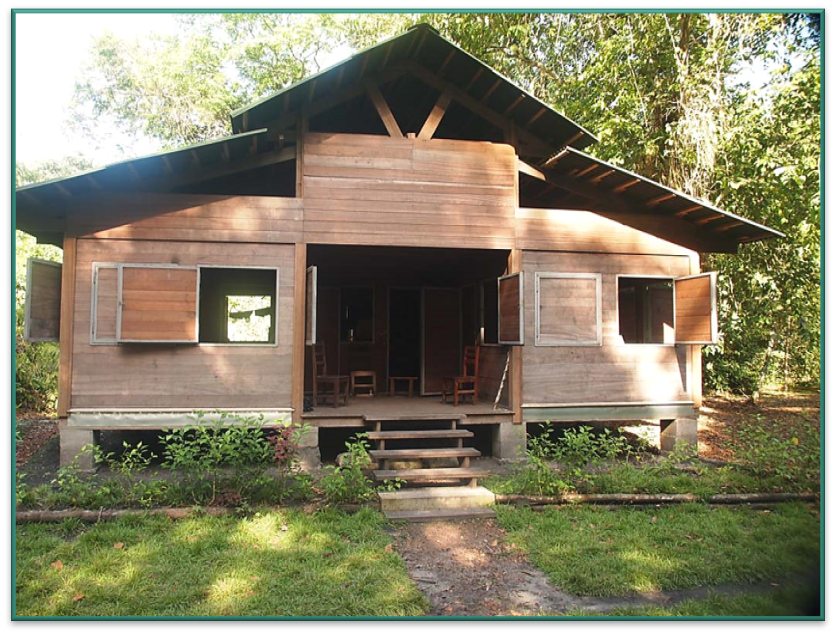
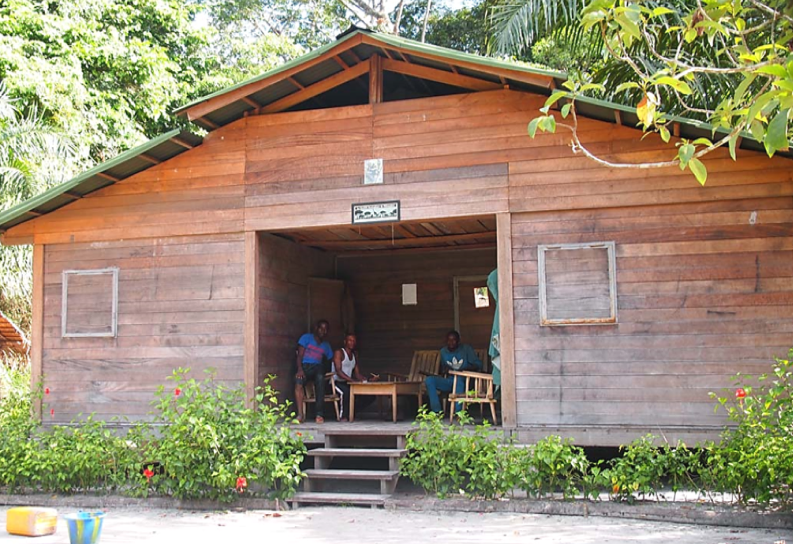
The research house (top) and the guardhouse (bottom) at Etate.
Etate today
In the years following the destruction of the original hunting camp, Etate was under the protection of ecoguards who conducted regular patrols in the region. Their presence minimized poaching and allowed wildlife to flourish. Etate has become a natural laboratory in which to study the area’s diverse and plentiful animal populations unaltered by persistent hunting pressure. The Etate zone (~1000 km2) harbors approximately 800 bonobos and up to 100 forest elephants.
Today, Etate supports a fully functional research station that serves as a base for SCI's biomonitoring and research. Etate houses 13 year-round staff which forms the backbone of SCI’s research activities. SCI's permanent presence at Etate has an important protective function. Our team's daily activities—wildlife surveys, camera trap maintenance, trail monitoring—provide constant human presence that deters poachers. We have enjoyed hosting other, international organizations and researchers to the Etate site.
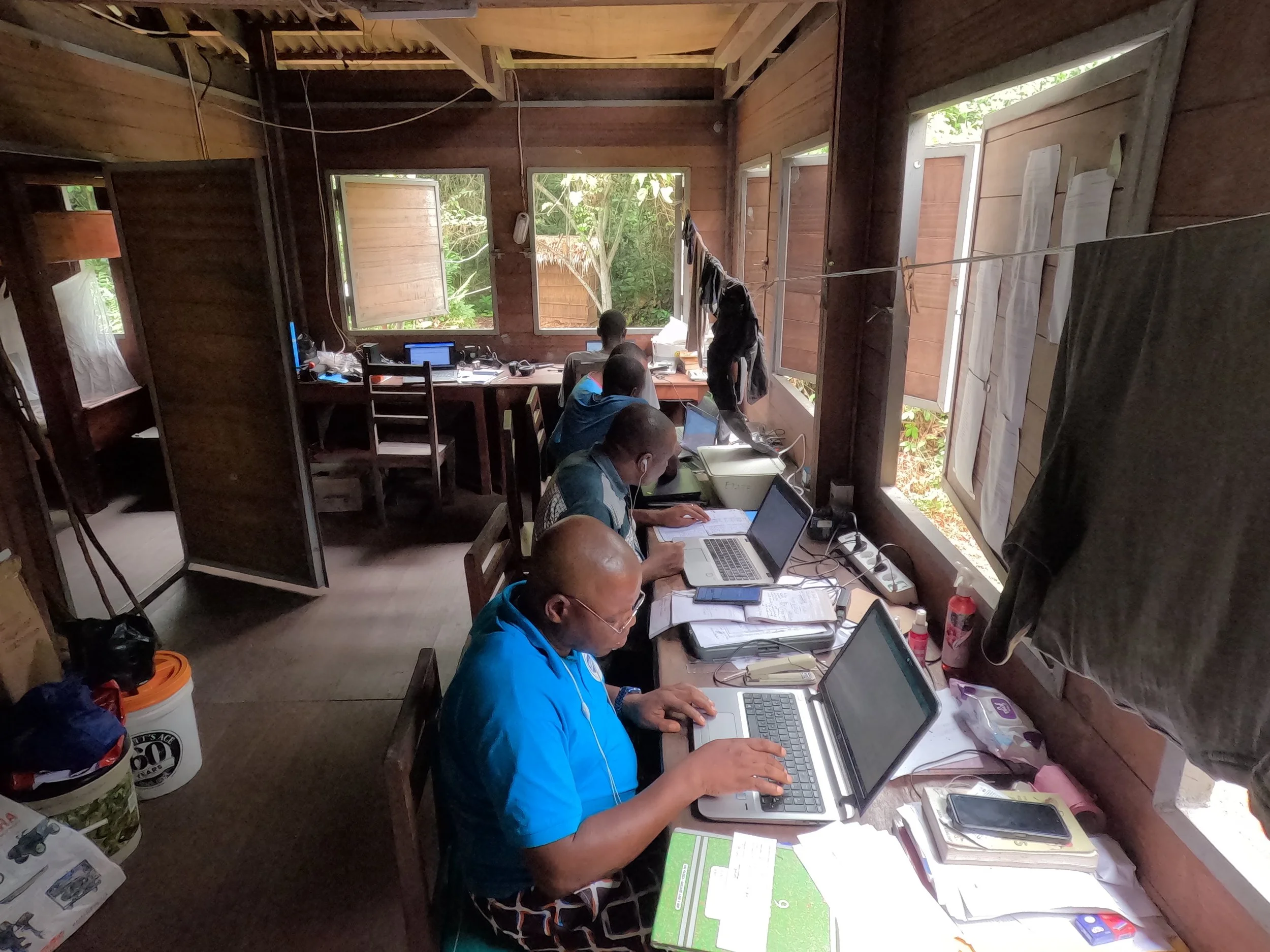
Modern research infrastructure provides for real-time data analysis and communication with conservation partners.
Permanence requires sustained support. Our generous donors help ensure that we can continue to maintain a year-round research presence in Salonga's interior.
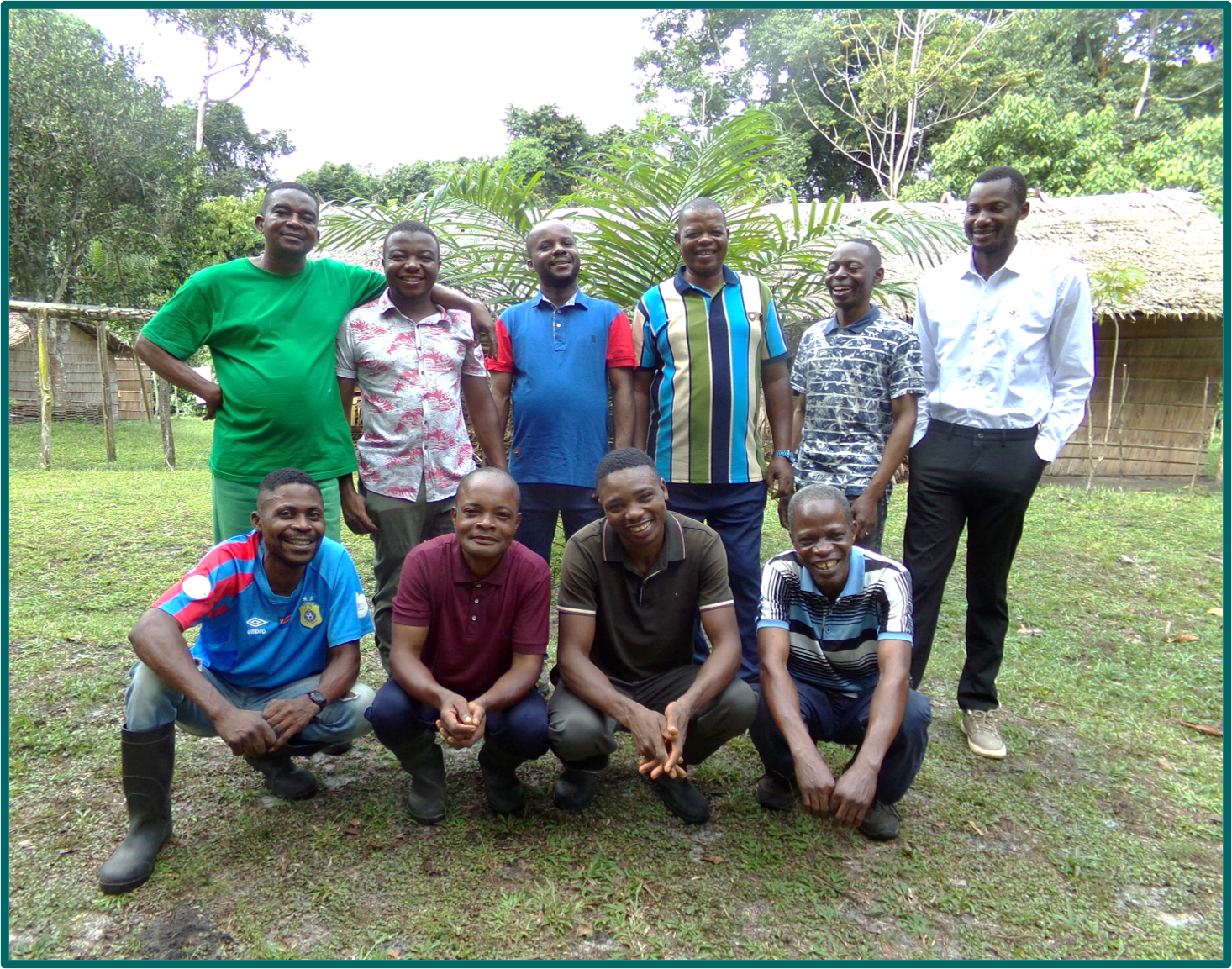
The 2025 Etate team: researchers and field technicians maintain a year-round presence in Salonga.