

Documenting the return of the elephant to Etate
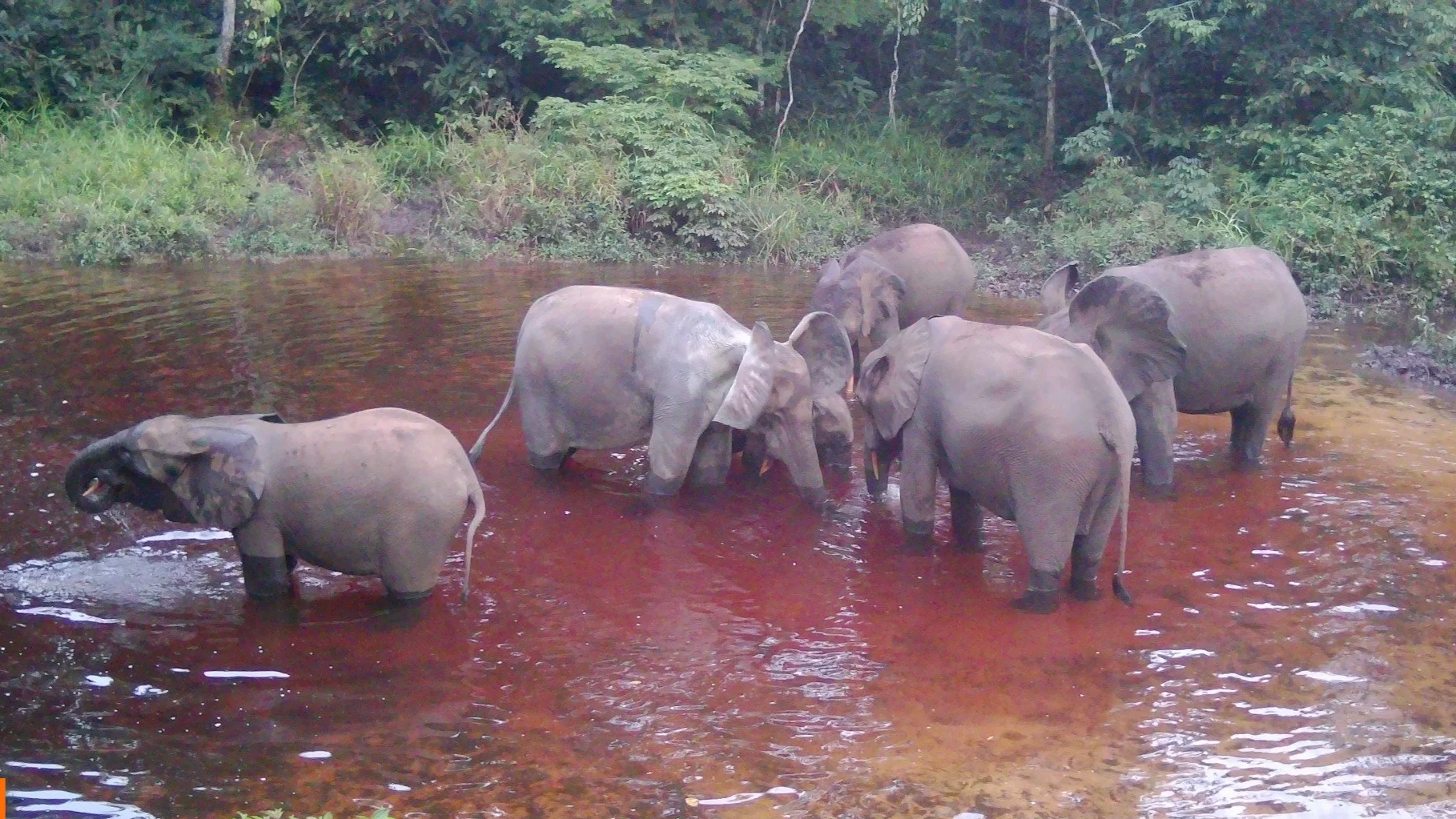
The Etate forest was crisscrossed by old elephant trails that cut deep into the earth - proof that elephants once had a long and significant history at this site. However, “When I first arrived at Etate, signs of elephants were quite rare,” explains Dr. Gay Reinartz, SCI Director, who together with Dr. Inogwabini Bila Isia, SCI Board member and noted conservation scientist in DRC, explored Etate together in 2001. Commercial hunting for the ivory trade had depleted about 90% of the elephants in the Salonga National Park by the mid 1990s.
As years went on, the Etate zone was regularly patrolled. By 2014 researchers began to see fresh footprints and dung piles along the forest trails and in the neighboring elephant bai, a large forest clearing, called Lofekiamengi. The ecoguards, who were resident at Etate in those years, began recording more elephant signs during their patrols. It became joyfully obvious to the Etate research team that elephants were moving back to Etate.
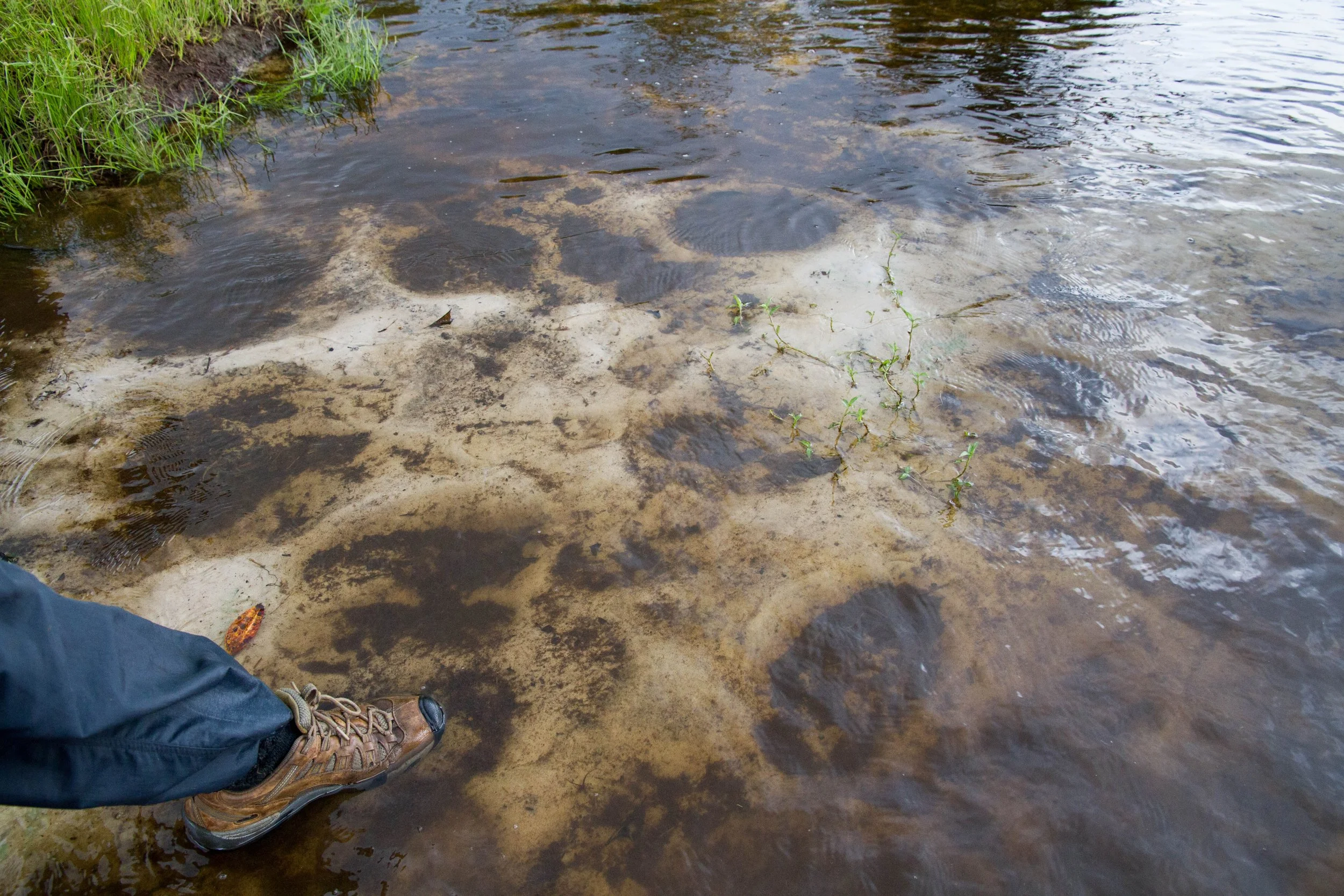
Elephant footprints seen in the bai. Bais, or forest clearings, locally called botoka ndjoku, are thought to be formed and maintained by elephants who trample the vegetation and remove small trees.
These clearings are typically bisected by a stream or water source where elephants mine for minerals in the stream bed. They are an important habitat feature of Salonga and Central Africa; as sites of elephant congregation, they play a vital role in elephant socialization and behavioral ecology
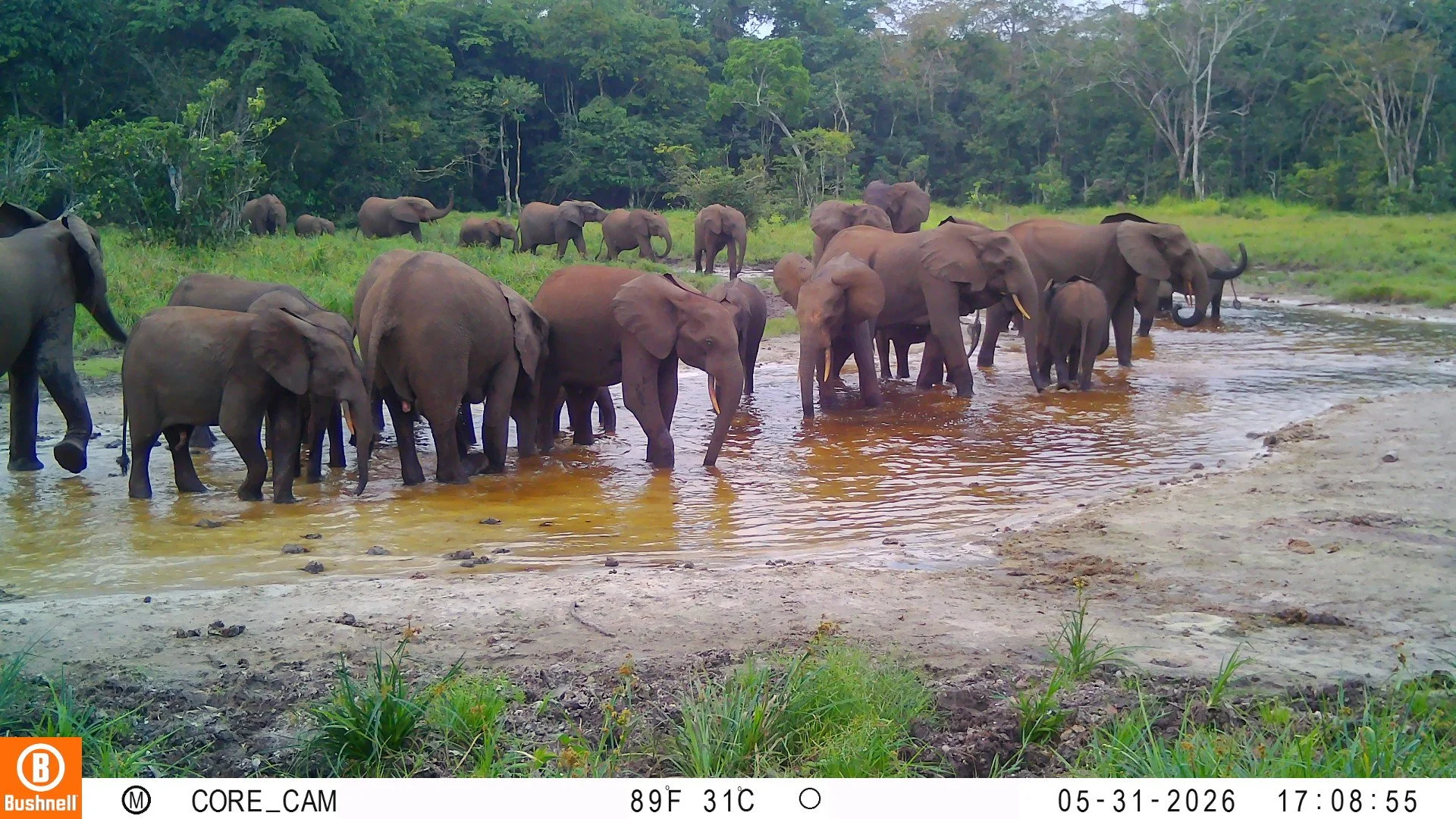
A rare photo of elephants in the bai during the day. Most elephant activity takes place at night, possibly as a protective measure against harm.
Researchers don’t know exactly why elephants came back to Etate. Survey data during those years showed a slight population rise but not a statistically significant increase. One plausible explanation for seeing more elephants was that Etate’s consistent patrols created a safer zone for elephants to occupy.
To better protect these elephants, we want to understand their congregation patterns at Lofekiamengi bai and determine the elephant population's makeup.
Elephants are long-lived creatures. Their gestation period is 28 months. Such long lifespans require years of observations specific to the forest conditions in Salonga. Because elephants are shy and secretive and nearly impossible to observe in the forest, we turned to cameras, special “trails cams” that are activated by motion and heat, to "see” elephants, says Patrick Guislain, SCI project manager and lead bai researcher.
In 2018, in order to document elephant occurrence, we began testing the use of trail cameras by placing them in and around Lofekiamengi bai.
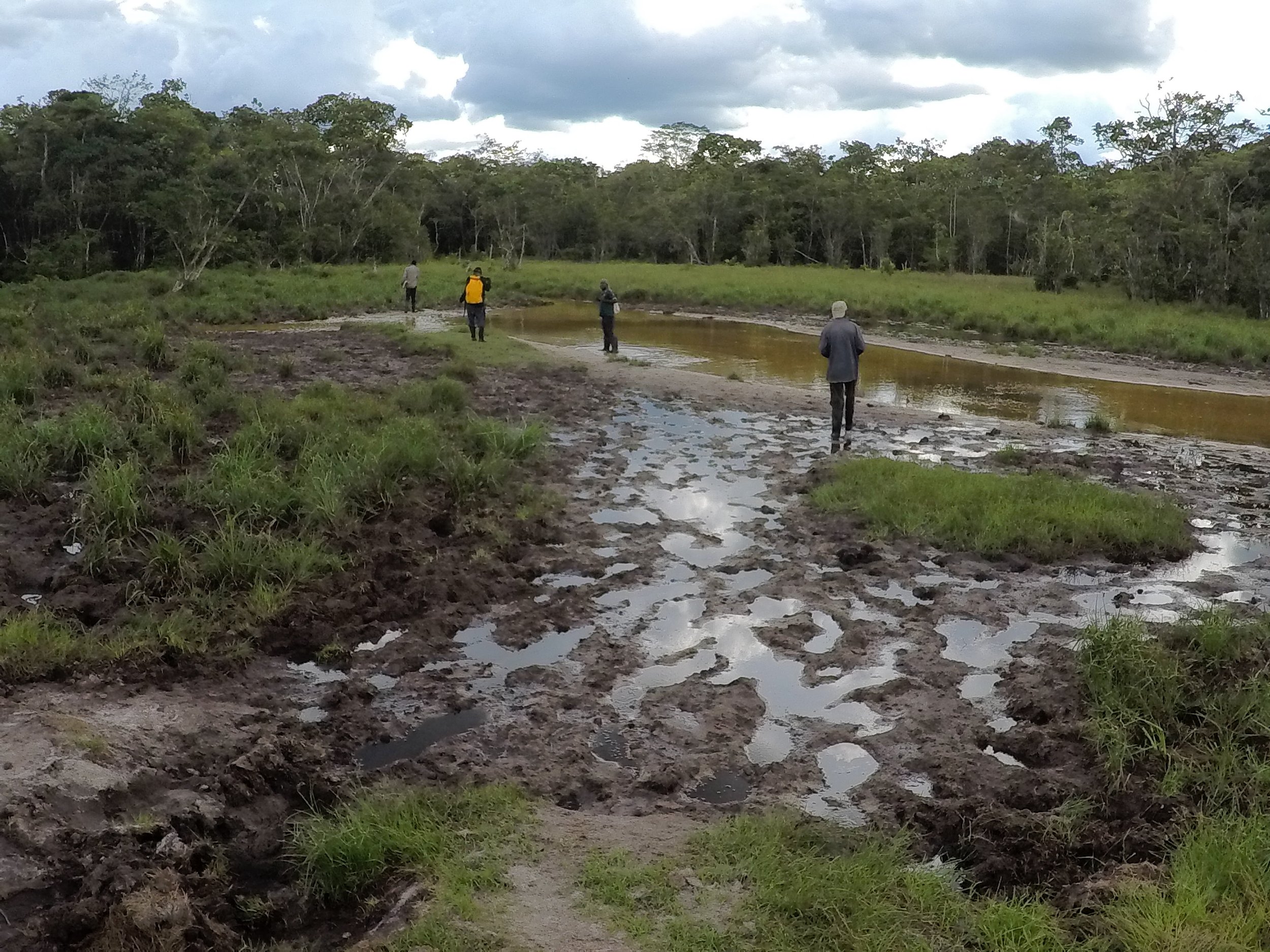
The SCI team surveys the bai
What started as a trial to understand what data can be captured by camera traps became a multi-year effort resulting in a growing database that can inform conservation strategies. Over the course of eight years, SCI has amassed over 600,000 images of elephants in the bai.
We can now track
Precise seasonal and daily elephant visitation patterns in the bai, and the level of daytime visits
Numbers of elephants arriving and leaving on four main bai access trails
Age, class and sex of elephants passing by on forest trails
Tusk size, height, and condition of elephants entering the bai
Repeated elephant visits by the same groups and the same individuals (individual identification is in progress)
Fusion of elephant family units into larger travel groups
Life history of already identified groups and individuals
Elephant behavior, notably possible occurrences of vigilance, in and around the bai
Our long term monitoring of Lofekiamengi bai establishes a baseline of daily patterns whereby changes in elephant habits, behavior or population makeup can signal park managers when disturbances occur and pressures act on the population. Camera traps have also detected hunters, reminding us that some level of threat is ever present.
This is a typical video showing elephant activity in the bai at night.
As a research organization with a permanent presence in Salonga's interior for nearly 30 years, SCI provides the continuity essential for long-term wildlife monitoring. SCI’s data are shared with the park authorities, ICCN and WWF, to help make Salonga National Park safer for forest elephants and other wildlife.
Elephants found a haven at Etate. Your support ensures that they stay.